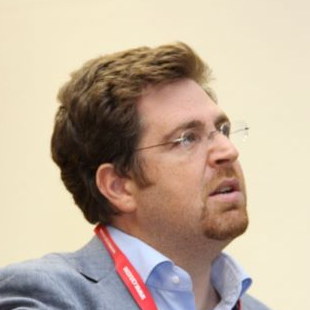
Giuseppe Nicosia is Associate Professor of Artificial Intelligence and Bioengineering at the University of Catania, Italy, and holds the National Scientific Qualification for Full Professor in both Computer Science and Bioengineering. He received his PhD in Computer Science and undertook postdoctoral research in Computer Science and Synthetic Biology. Since 2017 he has served as Visiting Professor at the University of Cambridge, UK and Senior Academic Visitor of the Wolfson College University of Cambridge, UK.
As of 2026, he has supervised and mentored dozens of PhD students and postdoctoral researchers and has served on the editorial boards of several international scientific journals. To date, he is the author or co-author of more than 200 publications in international journals and conference proceedings, as well as book chapters, edited volumes and books.
He has chaired numerous international conferences, summer schools, advanced courses, and workshops in the fields of artificial intelligence, machine learning, data science, computational biology, synthetic biology, and bioengineering. He founded and chaired the Advanced Course on Data Science and Machine Learning (ACDL, 2018–), the International Artificial Intelligence Summer School (IAISS, 2021–), the Artificial Intelligence Symposium (AIS, 2015–) and the Synthetic and Systems Biology Summer School (SSBSS, 2014-2019).
He has been awarded numerous research grants as Principal Investigator in the fields of bioengineering, synthetic biology, systems biology, artificial intelligence, and data science, and his research has received awards at several international conferences. He serves regularly as Area Chair or Senior Programme Committee Member for a number of major international conferences.
He has held visiting appointments and scholarships at the University of Cambridge (2017–2021), following regular and extended research visits between 2004 and 2016; the Massachusetts Institute of Technology (2006–2010); the University of Florida; Nicolaus Copernicus University, Poland; Linköping University, Sweden; New York University; the Scuola Normale Superiore, Pisa; and the European Brain Research Institute ‘Rita Levi-Montalcini’ (EBRI), Rome.
Selected Publications
Selected Publications
-
G. Jansen, T. Qi, V. Latora, G. Amoutzias, D. Delneri, S. Oliver, G. Nicosia, “Minimisation of metabolic networks defines a new functional class of genes,” Nature Communications, 15, Article no. 9076 (2024). DOI: 10.1038/s41467-024-52816-2.
-
C. Pravin, I. Martino, G. Nicosia, V. Ojha, “Fragility, robustness and antifragility in deep learning,” Artificial Intelligence, 327, 104060 (2024). DOI: 10.1016/j.artint.2023.104060
-
E. La Malfa, G. La Malfa, G. Nicosia, V. Latora, “Deep Neural Networks via Complex Networks Theory: A Perspective,” Proceedings of the Thirty-Third International Joint Conference on Artificial Intelligence (IJCAI-24), Jeju, South Korea, 3–9 August 2024, pp. 4361–4369 (2024). DOI: 10.24963/ijcai.2024/482
-
T. Borsani, A. Rosani, G. Nicosia, G. Di Fatta, “Gradient Similarity Surgery in Multi-task Deep Learning”, Proceedings of the Joint European Conference on Machine Learning and Knowledge Discovery in Databases (ECML-PKDD 2025), Porto, Portugal, September 15–19, 2025, Lecture Notes in Computer Science LNAI, 16020, pp. 95–111 (2025). DOI: 10.1007/978-3-662-72243-5_6
-
V. Ojha, B. Pantò, G. Nicosia, “Adaptive Search Space Decomposition Method for Pre- and Post-Buckling Analyses of Space Truss Structures,” Engineering Applications of Artificial Intelligence, 117, 105593 (2023). DOI: 10.1016/j.engappai.2022.105593
-
V. Ojha, G. Nicosia, “Backpropagation Neural Tree,” Neural Networks, 149, pp. 66–83 (2022). DOI: 10.1016/j.neunet.2022.02.003
-
T. Borsani, G. Nicosia, G. Di Fatta, “Multi-task Deep Learning for the Multi-label Prediction of Neurodegenerative Diseases”, 2026 IEEE Conference on Artificial Intelligence (CAI), pp. 159-166 (2026). DOI: 10.1109/CAI68641.2026.11536260
Researcher Profiles
ORCID, Google Scholar, Web of Science ResearcherID, PubMed, Scopus, Semantic Scholar, DBLP, Academia.edu, Loop (Frontiers).
Research
Research Themes
Artificial Intelligence for Scientific Discovery
Generative AI, AI Agents, Synthetic Biology, Bioengineering.
Research Vision
His research develops artificial intelligence systems capable of reasoning over scientific knowledge, generating hypotheses, designing experiments and accelerating discovery in biology and medicine.
AI for Scientific Discovery
Generative AI, Large Language Models (LLMs), AI Agents, Scientific AI.
Synthetic & Systems Biology
Biological Networks, Genomics.
AI for Biomedicine
Bioengineering, Precision Medicine, Neurodegenerative Diseases. AI-driven therapeutic discovery for neurodegenerative diseases.
AI Scientists and Autonomous Scientific Discovery
Agentic AI. Building AI systems that do not merely analyse scientific knowledge, but generate, test and refine scientific hypotheses.
Research Grants
Principal Investigator or Co-Principal Investigator of national projects (for example, PRIN), European Union research projects, Italy–Sweden bilateral projects and the ERG – Energy for a Green Society initiative.
Research Collaborations
- Prof. Steve Oliver, University of Cambridge, UK
- Prof. Forbes Dewey, Massachusetts Institute of Technology, USA
- Prof. Bud Mishra, New York University, USA
- Prof. Panos Pardalos, University of Florida, USA
- Prof. Pietro Liò, University of Cambridge, UK
- Prof. Rodrigo Ledesma-Amaro, Imperial College London, UK
- Prof. Antonino Cattaneo, Scuola Normale Superiore, Pisa, and European Brain Research Institute ‘Rita Levi-Montalcini’ (EBRI), Rome, Italy; Accademia Nazionale dei Lincei, Italy
- Dr. Renato Umeton, Dana-Farber Cancer Institute, Harvard University, USA
- Prof. Giuseppe Di Fatta, Free University of Bozen-Bolzano, Italy
- Dr. Luca Zammataro, The University of Texas MD Anderson Cancer Center, Houston, Texas, USA
- Dr. Varun Ojha, Newcastle University, UK
- Prof. Danilo Porro and Prof. Paola Branduardi, University of Milano-Bicocca, Italy
- Dr. Ivan Arisi, European Brain Research Institute Rita Levi-Montalcini (EBRI) Rome, Italy
Invited Talks
Selected Invited Talks
- Linköping University, Sweden (November 7, 2022)
- University of Oxford – Mathematical Institute, UK (January 18, 2019)
- University of Cambridge, UK (January 7, 2019)
- Middlesex University, UK (December 6, 2017)
- Microsoft Research Cambridge, UK (December 4, 2017)
- Nicolaus Copernicus University, Poland (August 2014)
- University of Trento, Italy (February 2008)
- Princeton University, USA (December 2007)
- New York University, USA (December 2007)
- Cadence Design Systems Inc. – Pittsburgh, USA (November 2007)
- Carnegie Mellon University, USA (November 2007)
- MIT, USA (November 2007)
- University of Kent, UK (March 2004)
Selected Invited Talks at International Conferences
- Data Analytics Conference, Hefei University, May 8, 2018 (Hefei University of Technology, China 2018)
- International Forum on High-end Equipment Smart Manufacturing Engineering Management in the New Generation of Information Technology Environment — hosted by the Chinese Academy of Engineering, Hefei University, May 7, 2018 (Hefei University of Technology, China 2018)
- Winter School on Data Analytics – WSDA 2016, December 17–19, 2016, Nizhny Novgorod (Russia 2016)
- 3rd Synthetic Biology Congress, UK, 20–21 October (London 2016)
- Third International Conference on Computational Biomedicine – CBM 2016, Gainesville, Feb 25–27 (University of Florida 2016)
- Computation as a driver for Translational Medicine, 5th International School Functional Genomics (Acicastello 2015)
- SCEE2012 Scientific Computing in Electrical Engineering, ETH Zurich, Switzerland, September 11–14 (ETH Zurich ’12)
- Doctoral Spring Workshop “Product and Asset Lifecycle Management” – PALM, 4–6 June (Taormina 2012)
- International Conference on From Self-Organisation in Living Systems to Sensor and Wireless Networks (Cambridge University 2009)
- International Conference on Artificial Immune Systems (Phuket 2008)
- Bio-INF – Information Theory in Genomics and Proteomics (Pisa 2008)
- KES Summer School on Artificial Immune Systems (Vietri sul Mare 2007)
- International Joint Meeting UMI-DMV (Perugia 2007)
- International Conference on Complex Systems in Molecular Biology and Medicine (Torino 2006)
- International Summer School on Computational Methods for Microelectronics (Messina 2005)
- ACM International Conference on Intelligent Computing & Information Systems (Cairo 2005)
Professional Activities
Scientific Leadership
- International Artificial Intelligence Summer School (IAISS), Founded 2021
- Advanced Course on Data Science and Machine Learning (ACDL), Founded 2018
- International Artificial Intelligence Symposium (AIS), Founded 2015
- The Interdisciplinary Centre of Advanced Studies (ICAS), Founded 2011
- Institute for Advanced Studies in Data Science (TaoSciences) Founded 2010
- Spring School in Synthetic Biology, Scuola Normale Superiore Pisa, 2026 (SSSB) Co-Director
- Synthetic and Systems Biology Summer School (SSBSS, 2014–2019) Co-Founder
- International Summer School of Functional Genomics, 2008 (Co-Chair)
- International Summer School on Natural Computation, 2008 (Founder)
Some Industry Roles
- Principal Researcher, AI Department, Almawave (2024-2025).
- Co-founder and Chief Technology Officer, NeoGenome Ltd, UK (2020-2022).
- Research Collaborations/Projects, Consultancy: ST Microelectronics, Cadence (2003-2013).
General Chair, Programme Chair and Organising Committee Chair
- IEEE CIBCB 2019 — Conference on Computational Intelligence in Bioinformatics and Computational Biology, 24–27 July 2019
- SCEE 2018 — 12th International Conference on Scientific Computing in Electrical Engineering, 23–27 September 2018
- European Conference on Mathematics for Industry - ECMI, 2014
- 12th European Conference on Artificial Life, 2013
- 7th Learning and Intelligent Optimization Conference, 2013
- 11th International Conference on Artificial Immune Systems, 2012
- 12th International Conference on Parallel Problem Solving from Nature, 2012
- 10th International Conference on Artificial Immune Systems, 2011
- International Workshop on Nature-Inspired Cooperative Strategies for Optimization, 2007
- SIMAI 8th Congress on Applied and Industrial Mathematics, 2006
- International Workshop on Evolutionary Computation, 2006
- International Workshop on Natural and Artificial Immune Systems, 2005
- International Conference on Artificial Immune Systems, 2004, 2011 & 2012
Programme Committee Member for numerous international conferences in AI, deep learning, machine learning, and data science.
Editorial Board Member
Synthetic Biology, Oxford University Press. Artificial Intelligence in the Life Sciences. IEEE Transactions on Systems, Man, and Cybernetics: Systems. IEEE/ACM Transactions on Computational Biology and Bioinformatics.
Academic Reviewing
Peer Reviewer for International Journals published by Nature Portfolio, Oxford University Press, MIT Press, ACM, IEEE, Springer Nature, Elsevier, Wiley and other publishers.
External Reviewer and Evaluator for Research Proposals and Funding Programmes, including EU projects, National Projects, EPSRC, ESF, the Wellcome–Wolfson Human Reproduction Institute (WHRI) and Marie Skłodowska-Curie Actions, ERASynBio (Synthetic Biology ERA-NET), and Science Foundation Ireland.
External PhD Examiner
- University of Cambridge, UK - 2009
- Indian Institute of Technology, India - 2013
- University College Dublin, Ireland - 2019
Committee Membership
- “Marco Cadoli” PhD Thesis Prize Committee, 2012, Italian Association for Artificial Intelligence (AI*IA)
- Reviewer for the “Distinguished Dissertations” Award, British Computer Society (BCS)
Membership of Learned Societies
IEEE Engineering in Medicine and Biology Society; Association for Computing Machinery (ACM); Institute of Electrical and Electronics Engineers (IEEE).
Advisors
Academic Mentors and Supervisors: Vincenzo Cutello, Angelo Marcello Anile, Forbes Dewey, Steve Oliver.
Selected Awards
- 2024 500 Leading Italian Figures in Artificial Intelligence - 500 Italiani e Italiane che contano nell’Intelligenza Artificiale 2024 (in Italian)
- 2012 — Turing-100, Turing Centenary Conference, Manchester
- 2010 — International Conference on Biosciences – BIOINFO Best Paper Award
- 2007 — 27th SGAI International Conference on Artificial Intelligence Best Refereed Technical Paper Prize, sponsored by Hewlett-Packard Labs
- 2004 — IEEE Neural Network Society – Computational Intelligence Society Scholarship
- 2003 — AAAI – American Association for Artificial Intelligence Scholarship
- 2003 — Scuola Normale Superiore di Pisa – University of Pisa Research Fellowship
- 2001 — Grant Holder at CINECA – High Performance Computing, University of Bologna (Fellowship)
- 1999 — Volkswagen Foundation Scholarship
- 1999 — Young Researchers Project Award, University of Catania
- 1995 — IBM Leonardo 2000 Award
Teaching
- Medical and Surgical Robotics
- Artificial Intelligence for Bioengineering and Synthetic Biology
- Bioengineering and Synthetic Biology
- Artificial Intelligence
- Machine Learning
Contacts
Artificial Intelligence and Bioengineering Laboratory — Artificial Intelligence & Synthetic Biology Group
Department of Biomedical & Biotechnological Sciences
School of Medicine, University of Catania, Italy
Torre Biologica
Via S. Sofia 97, 95123 Catania, Italy
giuseppe.nicosia@unict.it · +39 095 478 1289
Consultancy enquiries: giuseppe.nicosia.1@gmail.com